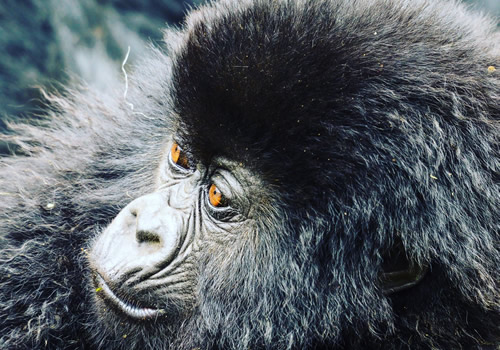
What is in a Gorilla Trek?
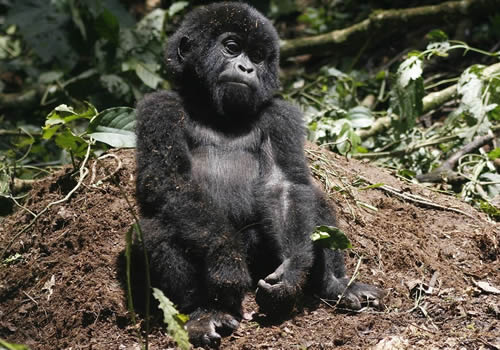
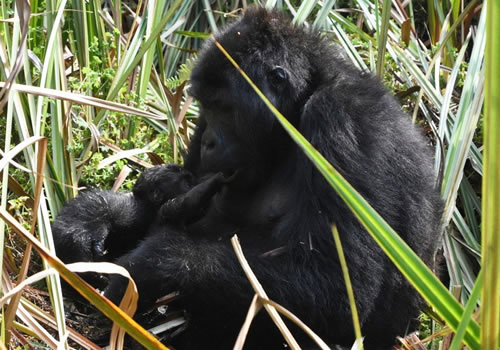
Gorilla Trekking is an unforgettable, life-changing safari experience – a unique adventure in the heart of Africa’s most spectacular rain forests. The treks take you deep into the rain forest in search of the magnificent mountain gorillas.
Basing on our attained experience, the trek can take anything from 30 minutes to a full adventure, as you wander through the forest to locate the gorillas. No matter how short or long the gorilla trek, spending time in the company of the gorillas, guarantees that the journey will be extraordinary. All our tours start either from Kampala, the Capital of Uganda or Kigali in Rwanda and take you deep into the natural tropical rain forests, homes to the few remaining rare and endangered mountain gorillas in the world.
Gorilla Trekking D-Day
A typical gorilla trekking starts with assigning the visitors to the respective habituated gorilla groups. In Rwanda the Park Authorities will assign them on site the day of the trekking.
After this formality the Rangers will give you a briefing of the way they will conduct this fantastic guided nature walk to the gorillas. They will give you extensive information on the environment, the gorilla family you will visit and the way you should behave with them. The so named gorilla rules will be clearly set out because its a corner stone in the conservation of the gorillas. There is not only a high risk of disease transmission to gorillas and vice versa, but the daily visits can cause behavioral disturbance and stress to gorillas. Please respect the rules!
Gorilla trekking is unpredictable and its difficult to foresee how many hours you will hike. In Bwindi the hiking time are generally much challenging. The terrain is usually more difficult in the rain forest and hiking times are longer because when looking for food Bwindi gorillas tend to travel longer distances per day. In Rwanda the gorilla trekking is usually easier except for the challenging Susa group located at the Karisimbi volcano.
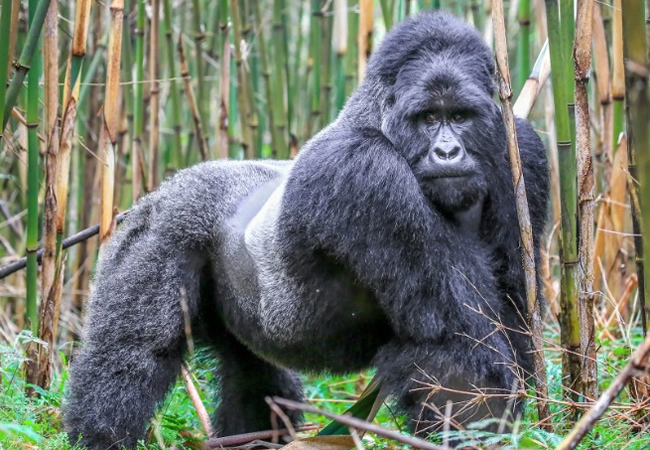
This doesn’t mean that you don’t need a good physical condition in Rwanda. We have seen several times that visitors had some problems during their trekking. Rain can get you by surprise and during the dry season gorilla tend to climb higher for their preferred bamboo shoots. It has to be said that the park rangers and the porters are extremely helpful and will do everything they can to make sure that visitors can see the gorillas.
For conservation purposed the time spend with the gorillas is limited to one hour. The daily visits have an impact on gorilla activity patterns. The daily visits are a source of animal stress and less feeding is a strong justification for the one-hour rule.
Gorilla trekking is the strongest animal experience ever! Tracking the gorillas is a unique experience – it leads you to meet unusual creatures on their own terms and its a very intense and trilling experience! You will be rewarded with a certificate of the National Park!
How many people go for the Gorillas?
Only 8 People are allowed to track a habituated gorilla group in Uganda. Rwanda and DR Congo. There are 24 habituated gorilla families that can be visited on a daily basis. This implies that 192 visitors go for gorilla trekking per day throughout the four gorilla trekking sectors in Bwindi Forest.
Mgahinga Gorilla national park on the other hand is home to only one Gorilla family and therefore 8 people visit the Nyakagezi habituated gorilla family in Uganda daily.
Who can go gorilla Trekking?
Everyone is welcome to go gorilla trekking as long as they have a permit, are at least 15 years of age, and are not sick. The gorillas share about 98% DNA with us so they are very susceptible to human disease and sickness. Something as small as the common cold or flu could wipe out an entire gorilla family. So if you find yourself sick the day of the trek, please let the rangers know and reschedule your trek for the sake of the gorillas.
Am I Guaranteed to See Mountain Gorillas on a Trek?
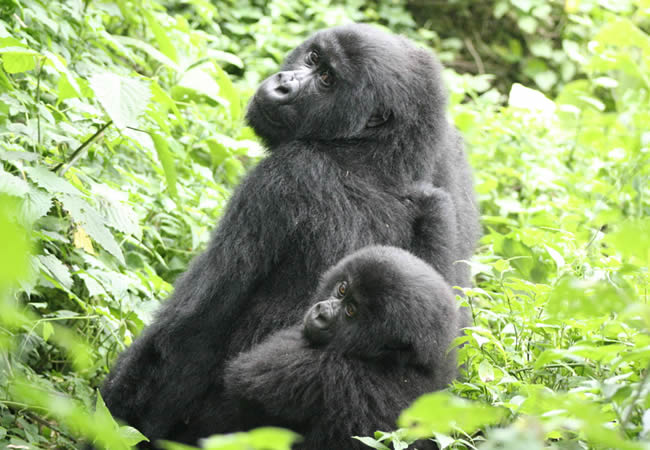
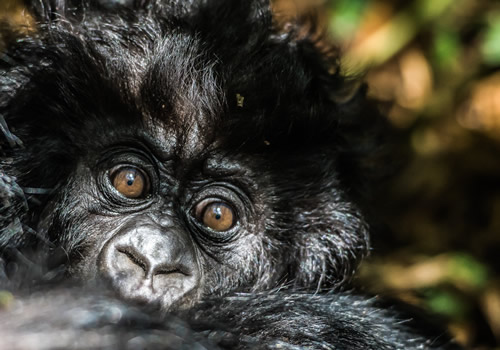
With anything that involves tracking animals in their natural habitat, nothing is 100% guaranteed, however the chance of seeing a mountain gorilla is extremely high. It’s very rare not to see any, as before you even get to the park, trackers are sent out to locate the gorillas and are in communication with your guide to make sure you and your group are heading in the right direction. Baby Mountain Gorilla hanging off a tree branch and being playful in the jungle.
Can I touch the Gorillas?
While it’s understandable to want to reach out and cuddle adorable gorilla babies, game rangers advise against touching these magnificent mammals. Being wild animals, gorillas can be unpredictable, and their immense strength can put you at risk of injury. Gorilla populations have been dwindling due to logging, poaching, and habitat loss from human encroachment. Keeping a safe distance protects both gorillas and humans from risky interactions.
More importantly, because gorillas and humans share an almost similar genetic makeup, they are at risk of contracting certain human illnesses. It’s important to keep a safe distance of at least ten meters at all times. In some instances, rangers may recommend wearing face masks. What’s more, the park officials often restrict sick travelers from taking the gorilla trek. Travelers should be in good health and take necessary precautions to prevent illness while on the trip.
How Long does it take to find the Mountain Gorillas?
This is a tricky question as wild animals don’t stay still for too long and can cover a lot of ground in a short period of time. Some trekkers are lucky enough to see them less than 30 minutes into the trek, while others can wait as long as four hours before spotting their gorilla family.
It’s also good to note that during your briefing the park rangers will have somewhat of an idea of where the gorilla families are (or were) and therefore will try to divide the trekkers based on their fitness level and their preference of a short, medium, or long trek. But, regardless of the time it takes, it will be worth it. After all, trekking in the jungle is also a part of this memorable experience.
Is it necessary to hire a Porter?
Before the trek, you will get a chance to hire a porter, someone who will carry your bags during the trek, for around $15. Depending on your level of fitness, which kind of trek you choose, and how much you bring with you, you might want to hire one, especially since most people aren’t used to walking for a long period of time with a loaded bag. Pairs can split the cost of a porter between them to make it cheaper. If you do hire a porter, know that you are supporting a local from one of the surrounding villages.